
Bust Banks
First developed by Shepard Manufacturing in the 19th century, the bust mechanism—where a coin is placed in a hand and drops via a retracting tongue—became iconic. Still used globally in banks featuring clowns, pirates, robots, and more, this enduring design spans continents and generations.
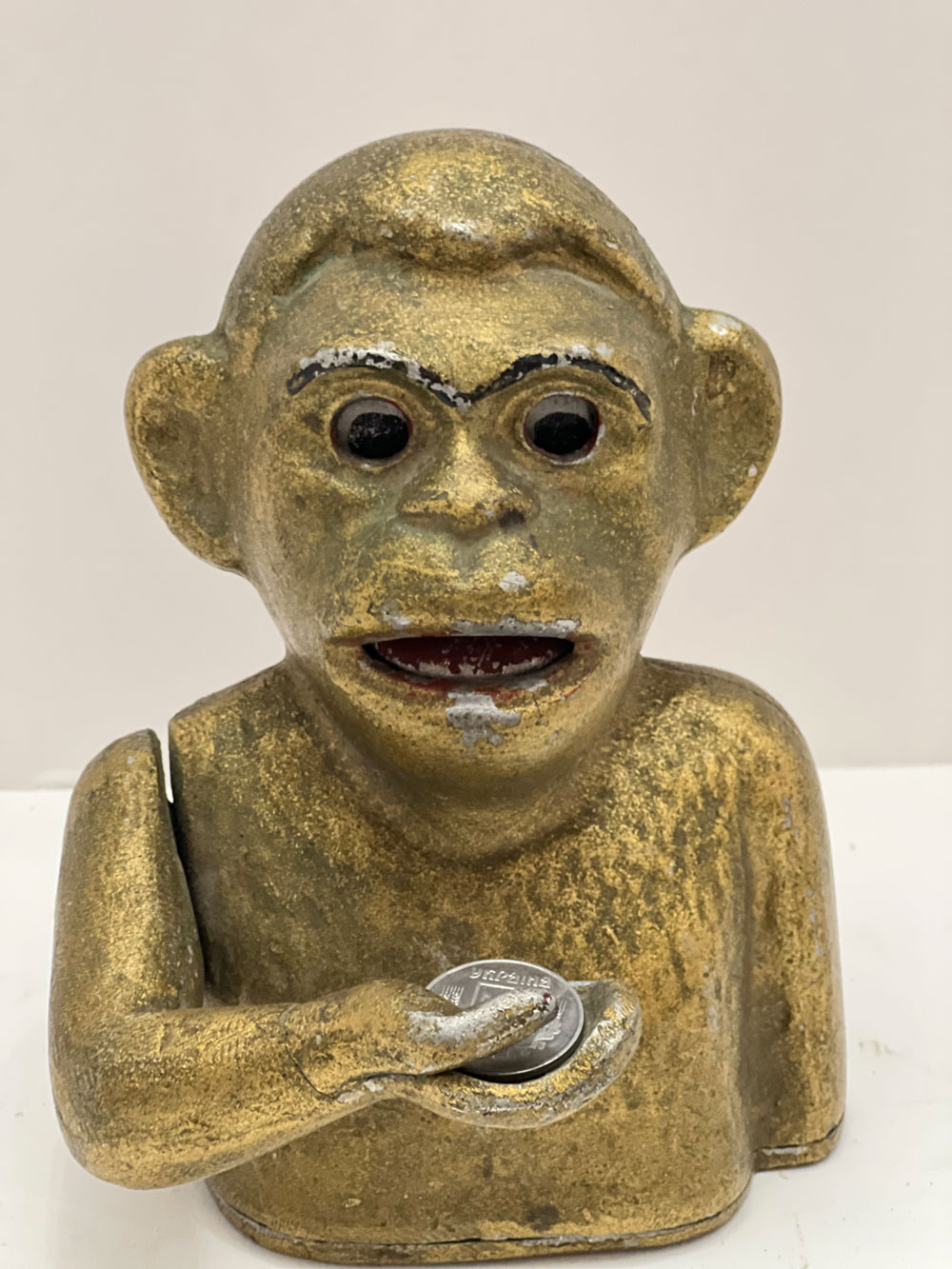
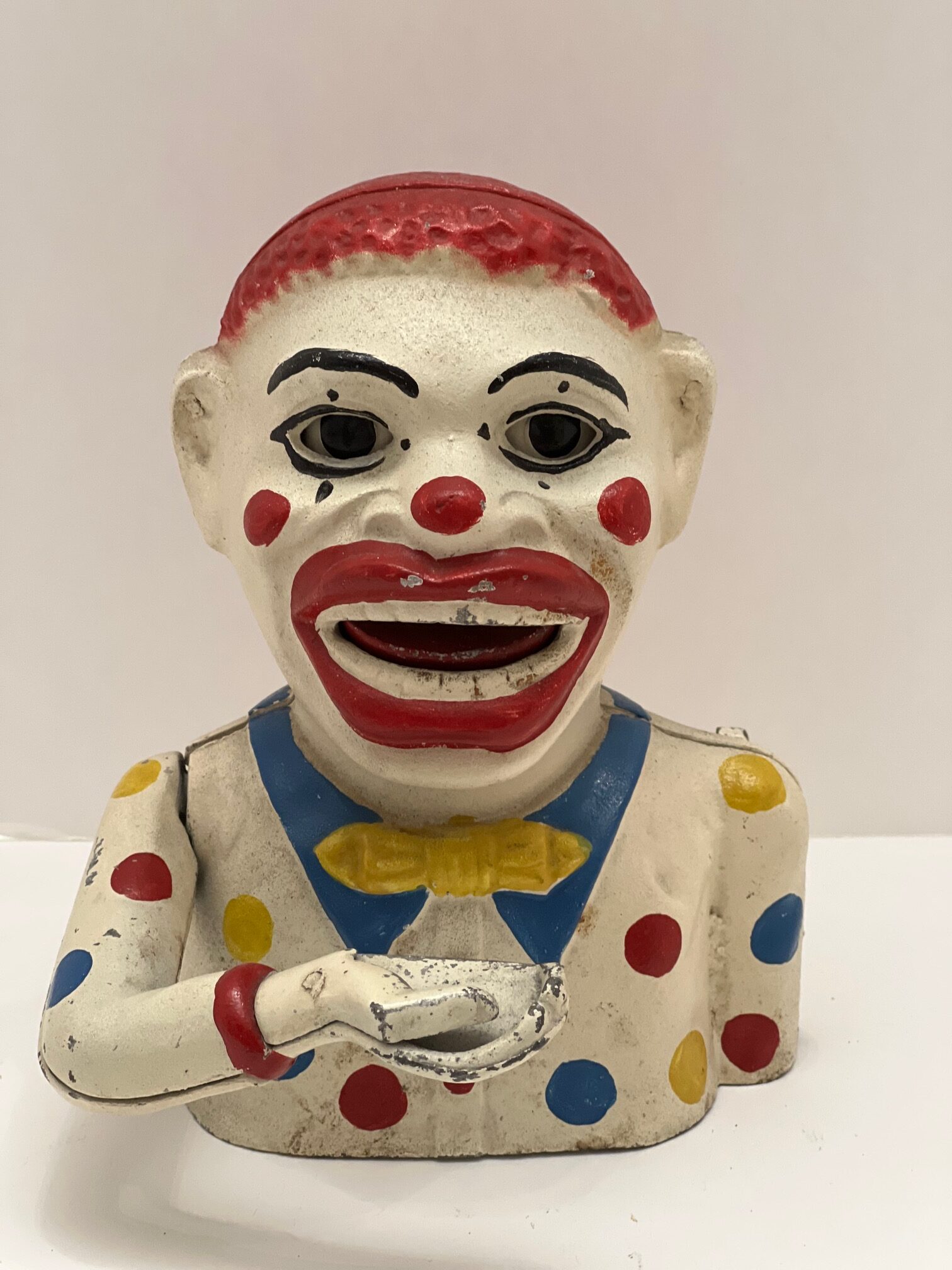
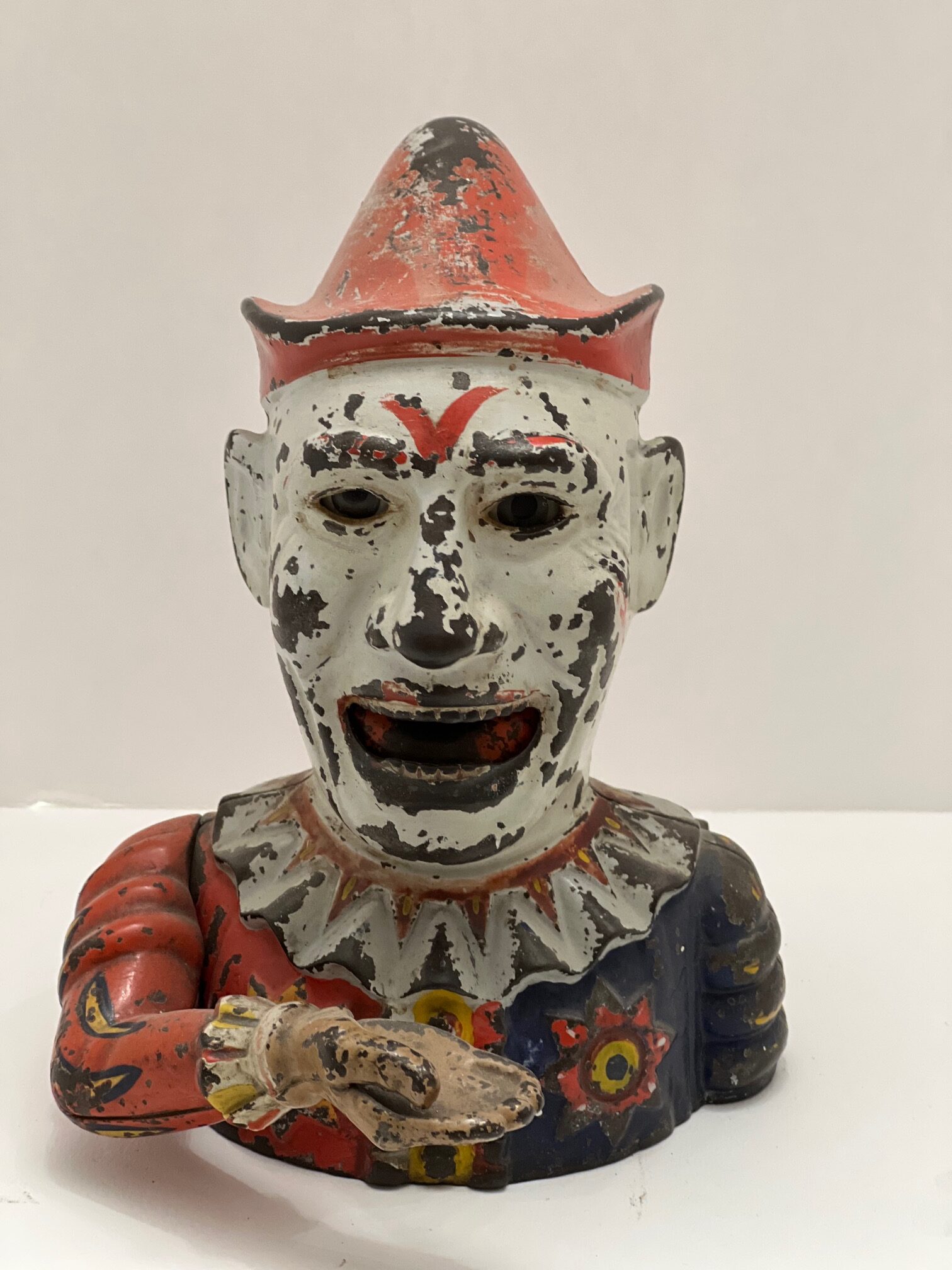
The Bust Mechanism: A Timeless Classic in Mechanical Bank Design
The most commonly used mechanism in mechanical banks is that of the bust. In all of them, a coin is placed into the outreached hand of the bank and when a lever is pressed on the back of the bank, the coin is delivered onto the tongue of the bust at which time the tongue withdraws dropping the coin into the bank. In many versions, at the same time the eyes of the figure roll either up or down. This mechanism was originally developed by Shepherd manufacturing of Buffalo NY for their jolly men banks but was also used in their Humpty Dumpty bank. This mechanism has been replicated many, many times and continues to be used today. It can be found in all kinds of clown banks, an Uncle Sam bank, a Pirate bank, an Indian bank, a Popeye bank, a Bulldog bank, a Robot bank, a Michelin Tireman bank, Rugby players banks, a Sasquatch bank, a Skeleton bank, just to name a few usages. It should also be noted that this mechanism has also been used around the world with banks now having been found from Great Britain, France, Italy, Greece, Germany, Spain, Australia, New Zealand, Austria, the Ukraine, as well as the United States. Many reproductions and modern banks today employing this mechanism are made in Asia; including India and China.