J. & E. Stevens Company
J. & E. Stevens Co.: Pioneers of the Mechanical Bank Era
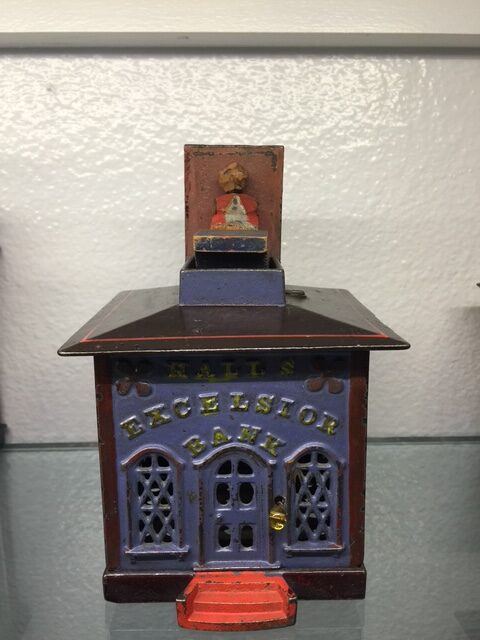
Around 1869, the company began producing cast iron mechanical banks like the Hall’s Excelsior and Horse Race banks, which were the first two mechanical banks made.
In 1889, Charles Bailey joined the company as its chief bank designer and introduced the graceful floral designs which became representative of the banks he created. By 1890, J. & E. Stevens abandoned the production of tools and began focusing only on banks and toys. In 1928, the company discontinued the production of banks and moved to cast iron cap pistols, which it made up until the mid-1950’s when the firm closed its doors forever.
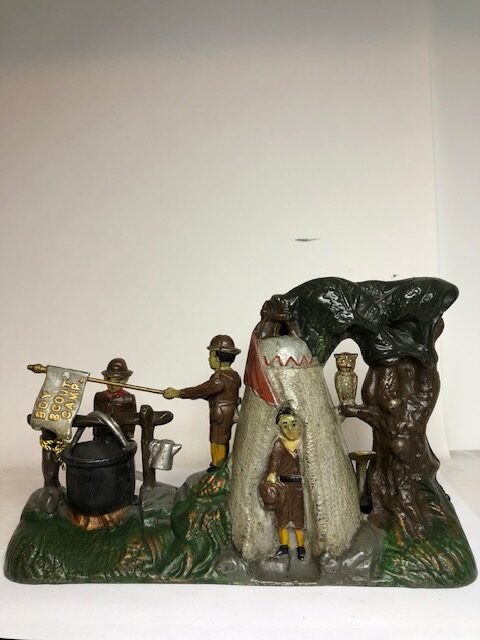
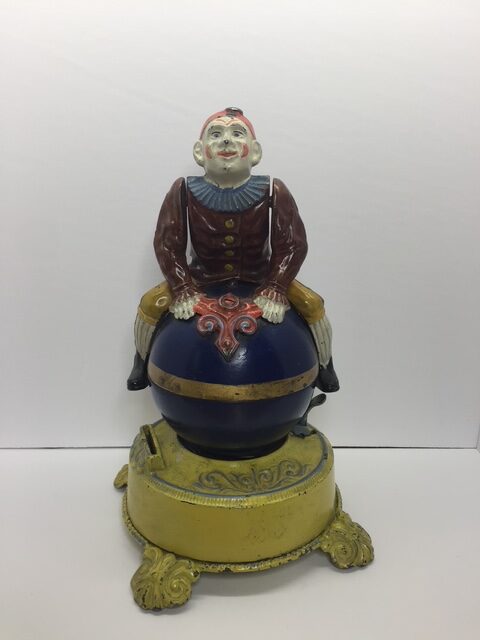
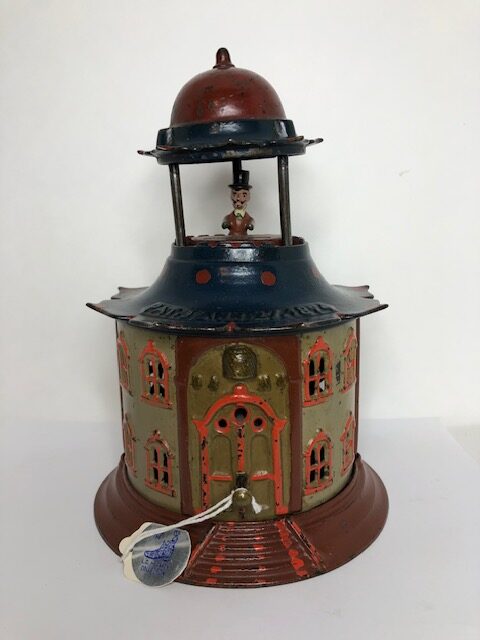
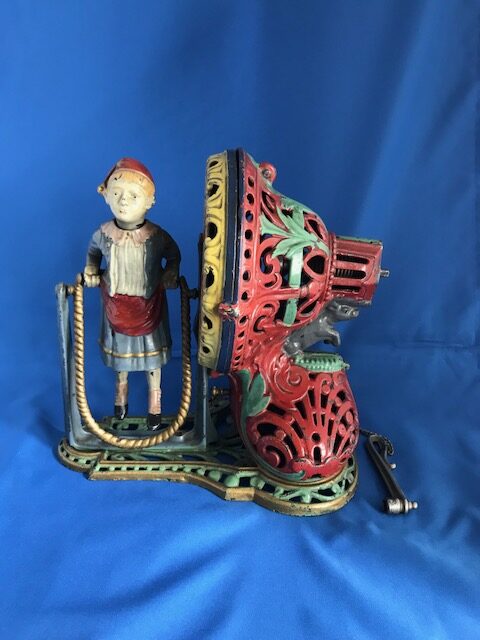
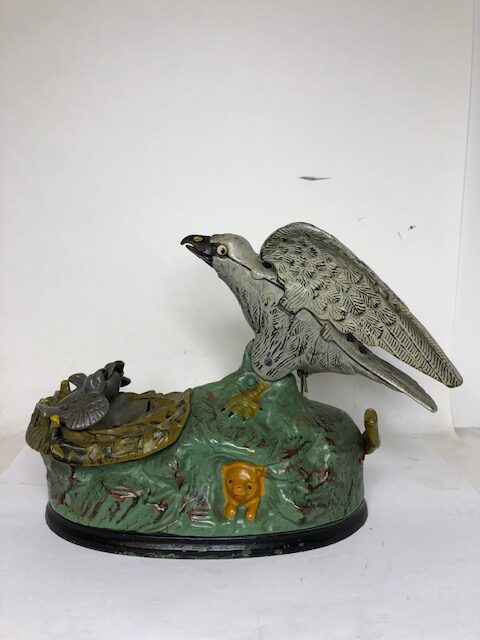
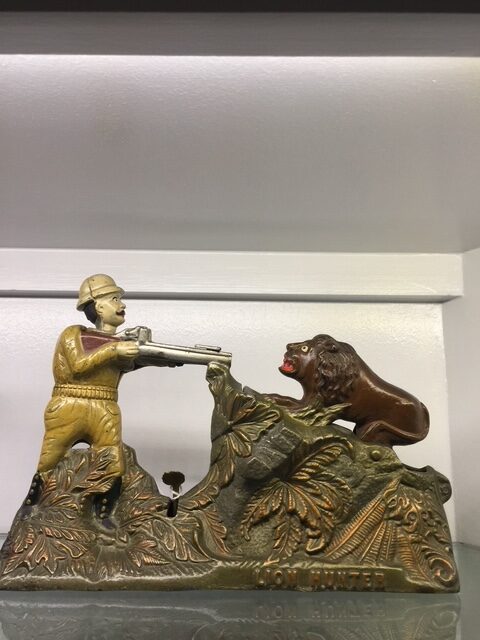
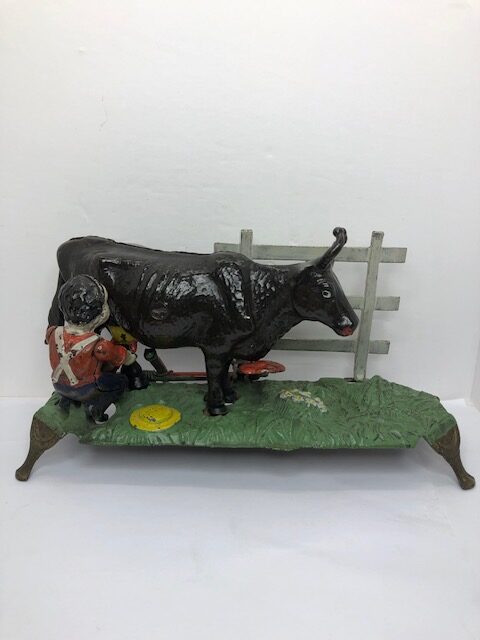
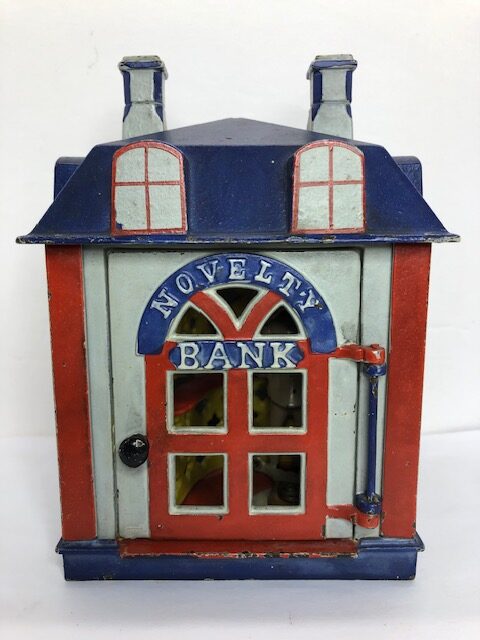
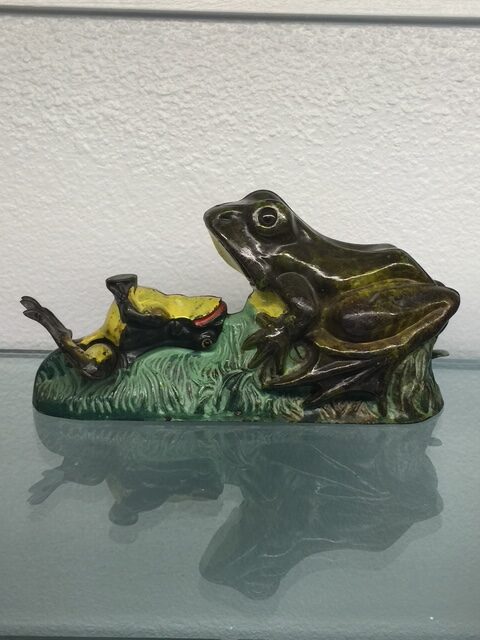
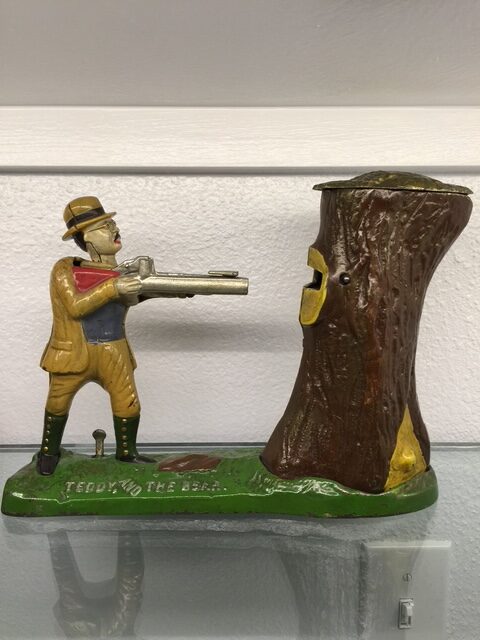
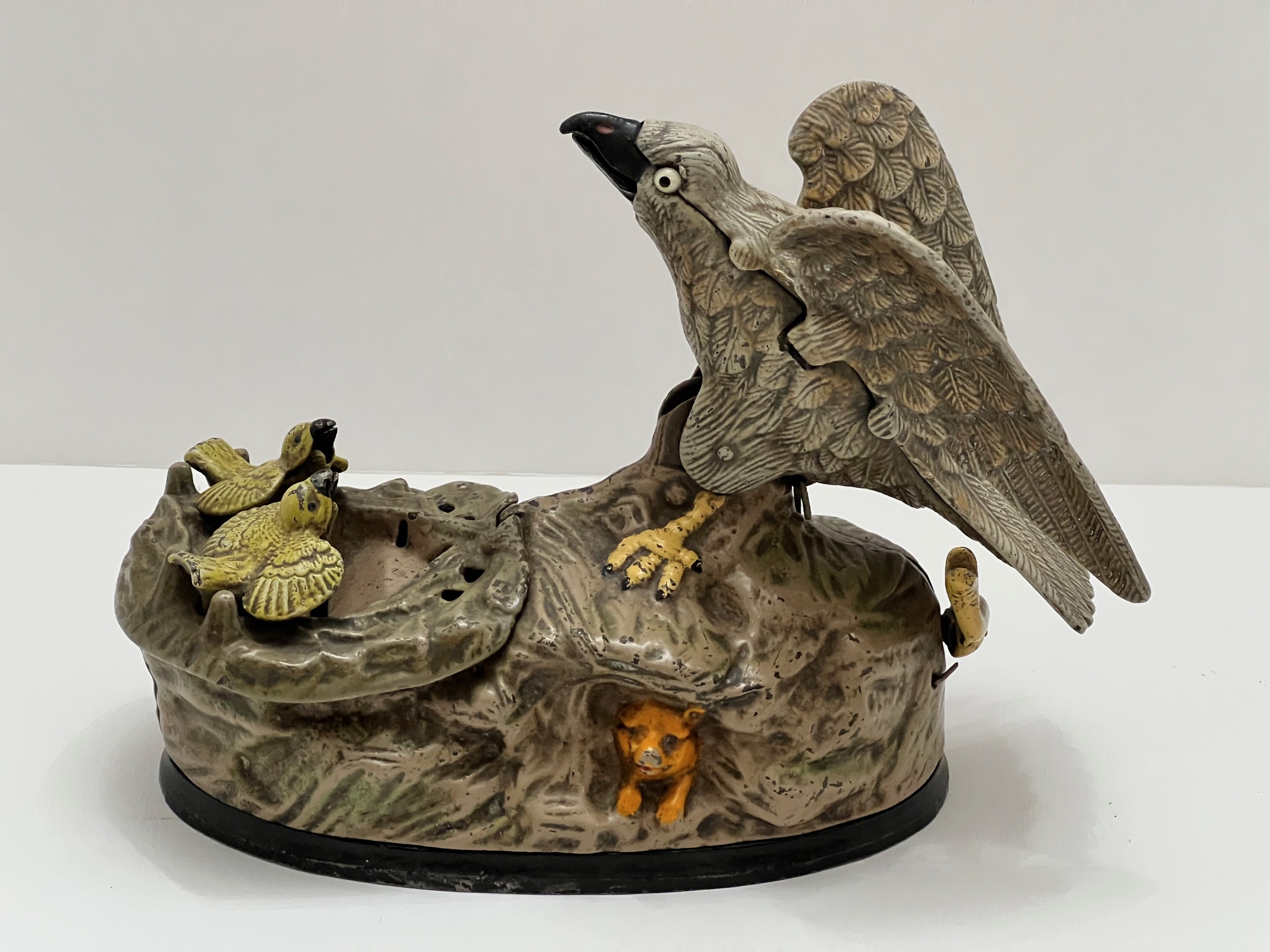
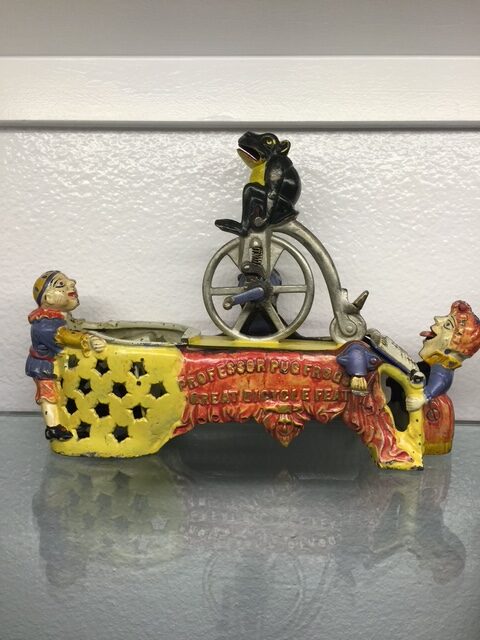
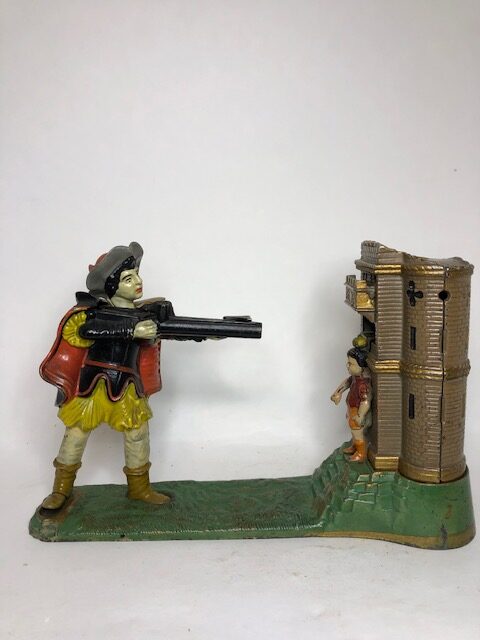
Some of its most-appreciated mechanical banks include the Tammany, Panorama, Cupola, Frog on Base, William Tell, Bank Teller, Preacher in Pulpit, Novelty, Magic, I Always Did Spise a Mule, Owl Turns Head, Two Frogs, Reclining Chinaman, Darktown Battery, Girl Skipping Rope, Clown on Glove, Cat & Mouse, Calamity, Harlequin, Indian and Bear, Professor Pug Frog, Bread Winners, Dentist, Milking Cow, Bad Accident, Chief Big Moon, Shoot the Chute, Teddy and the Bear, Lion Hunter, Boy Scout Camp, Artillery and Eagle and Eaglets banks.